The Hobby Rx: Strawberry Paint-by-Numbers
Quick recap: I'm spending 2026 trying a new hobby every month. January: puzzles (permission to pivot). February: coloring (when "relaxing" feels like work). March: diamond art (accessibility barriers and template elevation). April? Round two of template painting - this time with actual paint. Reels on IG and gasp started a YouTube! (Be nice - it’s new!)
Taking a Breather
Coming off the heels of a self-imposed deadline-driven diamond art to finish 12 canvases - remember those sticky canvases that forced one-sitting sessions? I understandably needed some time off from "painting" to avoid burnout.
So I gave myself a few weeks. Let the creative well refill. Then picked one of the mini paint-by-numbers I grabbed during my brainstorming back in January. (Spoiler: I should have waited to make a purchase!)
The Size Miscalculation
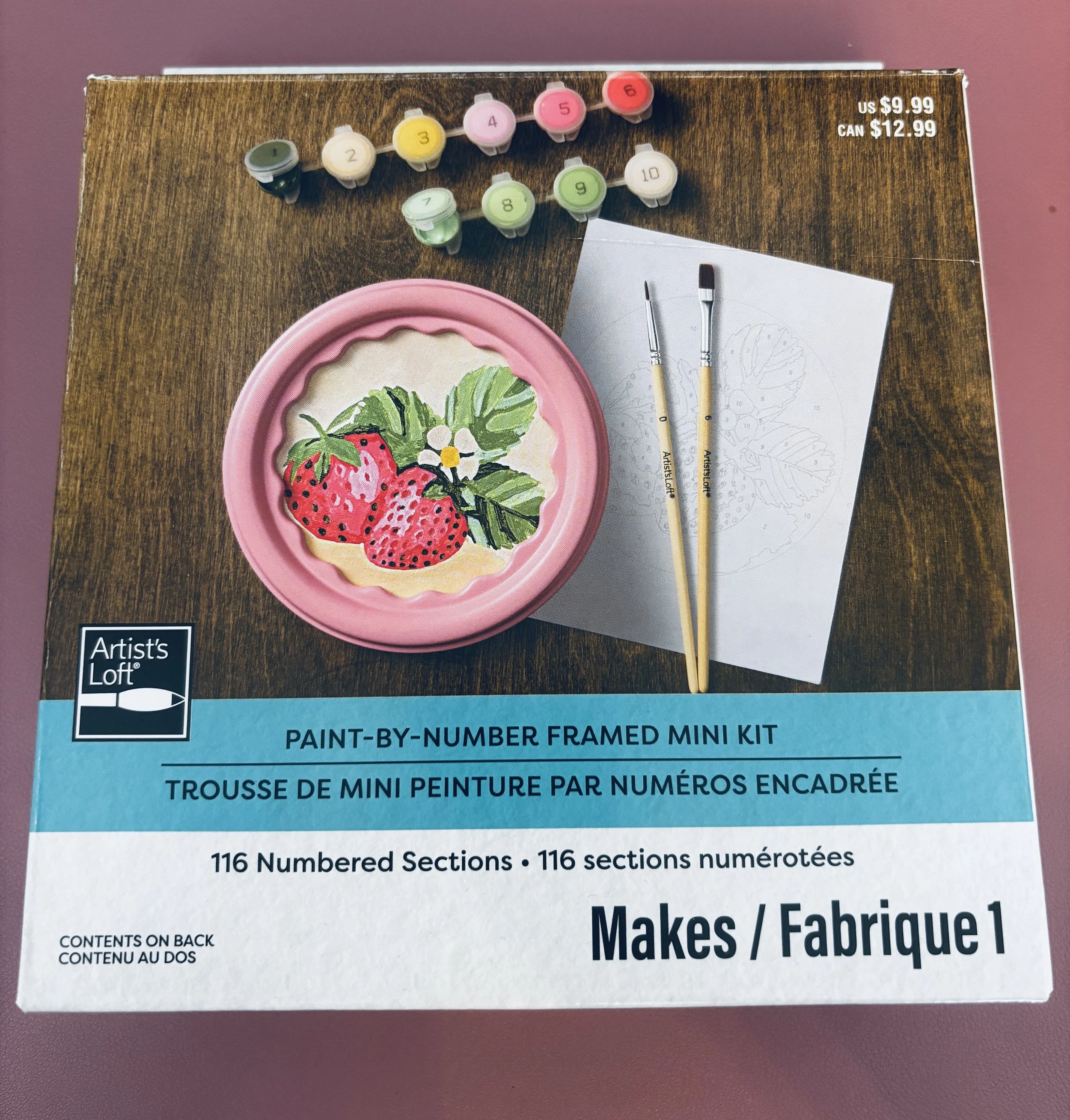
Here's my first mistake: I bought both the diamond art kit and this paint-by-numbers online at the same time during my initial planning. I had "minis" locked in my brain for both - limited wall space, small templates, easy peasy, right?
Wrong.
In hindsight, I should have considered the print itself - all those lines, angles, and tiny numbered sections - instead of just the finished product destination. I went mini for both diamond art and paint-by-numbers because of my wall space constraints.
Turns out, I should have gone bigger to lighten the load.
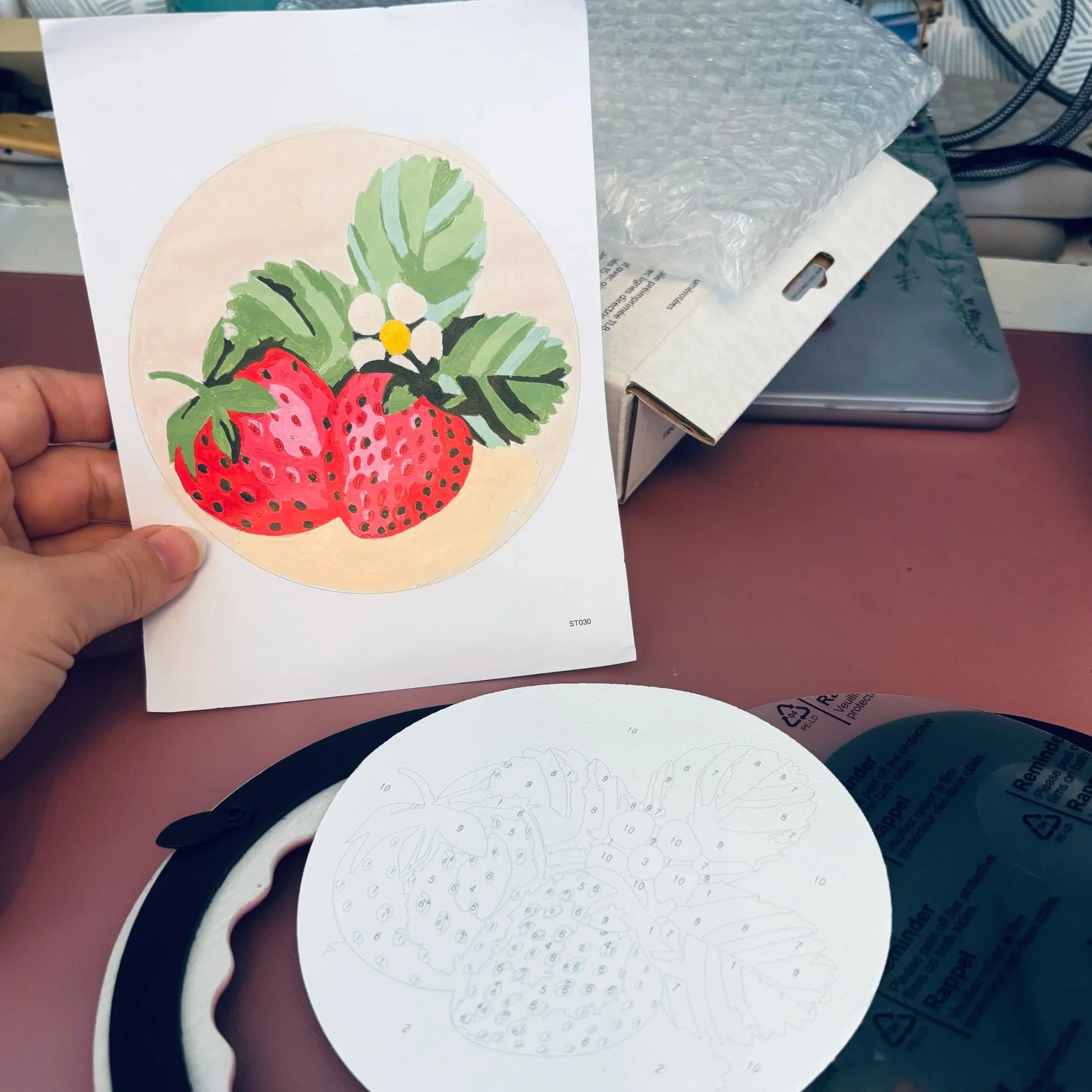
Trying to trace lines and paint patterns in this mini environment was tough. I felt like I needed a magnifying glass to be accurate - not realizing the template actually has some forgiveness baked in. But comparing my work-in-progress to the provided finished product photo? That's a real detriment to your mental energy when you're trying to make it exact. Reminder: I am not good at cutting straight lines, let alone coloring in them, so a challenging mini art print was really pushing myself to test my patience.
The Pleasant Surprises
So for the GOOD: The brushes were actually decent quality and appropriately sized. I was genuinely shocked - I'd read horror stories about terrible brushes making staying in the lines impossible. I opted to not pre-buy other brushes despite the social media ads being shouted at me to buy more. This is not a tale of consumerism but creative exploration gosh dangit!
The kit even came with instructions and tips that were mostly useful: paint one color at a time, avoid wet spots, work in sections. Standard stuff, but helpful for a first-timer.
Plus plenty of paint. Way more was provided than needed. In fact, I'm now trying to work up the courage to reuse the paints in a freehand version next. (Permission to make mistakes on a blank canvas, perhaps?) I tend to get ahead of myself…
The Learning Curve
Turns out I unintentionally painted using the "kiss method" - very light paint and light strokes. I don't know how I would have done this otherwise without making a goopy mess. But it meant I was going cross-eyed by the time I finished each color.
I also discovered that lighting is as critical as a steady hand. I used one of my online meeting ring light attachments, and it made a massive difference in seeing those tiny numbers and lines.
Here's what nobody tells you: I've had to go over several sections 3-4 times to get the right coverage. Fill in all the remaining white spots. Cover the lines and numbers completely. The finished product photo shows this perfect, smooth surface - but it doesn't show brush strokes. I wish it did, because then I'd know that multiple layers are normal, not a sign I'm doing it wrong.
I hold myself to a very high standard and I feel this is a case of Instagram vs. Reality. At first, faraway glance my finished product looks genuinely well done - so hats off to the template! But when you look at closer inspection you can see loads of imperfections. Depending on how much I decide to tweak the final product this may be hung on the high side to avoid scrutiny 😆
The Wet vs Dry Revelation
Preview warning if you want to try this yourself: The wet version looks awful. Splotchy. Uneven. I was convinced I'd ruined it.
But the dried version? I'm actually quite happy with it, even though I have a few more touch ups to do. Because I was painting so lightly (thanks, accidental kiss method), it dried pretty quick and I could see the real result faster.
The Real Challenge
Here's what challenged my brain the most: understanding that a painting will look different than a print.
The provided photo is a print - smooth, uniform, digitally perfect. My version is a painting - brush strokes, slight color variations, handmade imperfections.
Those aren't mistakes. That's the medium.
But try telling your perfectionist brain that when you're squinting at tiny strawberry seeds trying to make them match the photo exactly. I’ve had to talk myself through these expectations and remind myself this was a first time experiment and experience. I need to go with the flow.
Plot Twist: I Painted the Practice Round!!
Remember how I said I was happy with the dried result? How I learned all these lessons about templates and forgiveness and perfectionism? Yeah. About that.
Turns out I painted the wrong thing. Or maybe not wrong, but I painted the paper practice template. Inside the provided frame was the actual canvas version - you know, the one on actual canvas material that's meant to be the final product.
So I just finished... the practice round?
Good thing there's so much paint!
I mean, this is peak first-timer energy. Read the instructions, followed them carefully, completed the whole thing, felt accomplished... and completely missed that there were TWO canvases in the kit.
Permission to laugh at yourself. Permission to realize the "mistake" just means you get to do it again with everything you learned the first time. Permission to call the paper version your "rough draft" instead of a failure.
And honestly? Now I'm kind of excited to try the real canvas. I know about the kiss method. I know the wet version will look terrible. I know to judge it when it's dry. I know multiple layers are normal. Will I buy new brushes. Let’s be honest, probably!
The practice round taught me everything I needed to know.
So! To Recap:
Read the instructions THOROUGHLY. Check what's actually in the kit before you start. (Some of us learn this the fun way.)
Practice rounds are valid. Even accidental ones. Now you know exactly what to do differently on the real version.
Size matters. Go bigger than you think you need. Your eyes (and back, and sanity) will thank you.
Design matters more. Look for canvases with limited teeny details as a first timer.
Templates have forgiveness baked in. You don't need magnifying-glass precision. The design will read correctly even if you're not perfectly exact.
Don't compare your painting to a print. They're different mediums. Yours will have texture and personality. That's not a flaw.
The wet version lies. Judge your work when it's dry.
Lighting and a light touch. Ring lights aren't just for conference calls. And apparently I paint like I'm kissing the canvas - who knew?
Multiple layers are normal. If the finished product photo doesn't show brush strokes, you're not being shown the whole process.
Next up: May brings…options. I should finish the Canvas version to actually close this chapter and then I am thinking something more tangible. Looking into magnet making (a failed experiment last year!), candle making, or may pivot hard to crochet animals! The possibilities are literally endless but I do have a stash to choose from.