The Hobby Prescription I Didn't Know I Needed
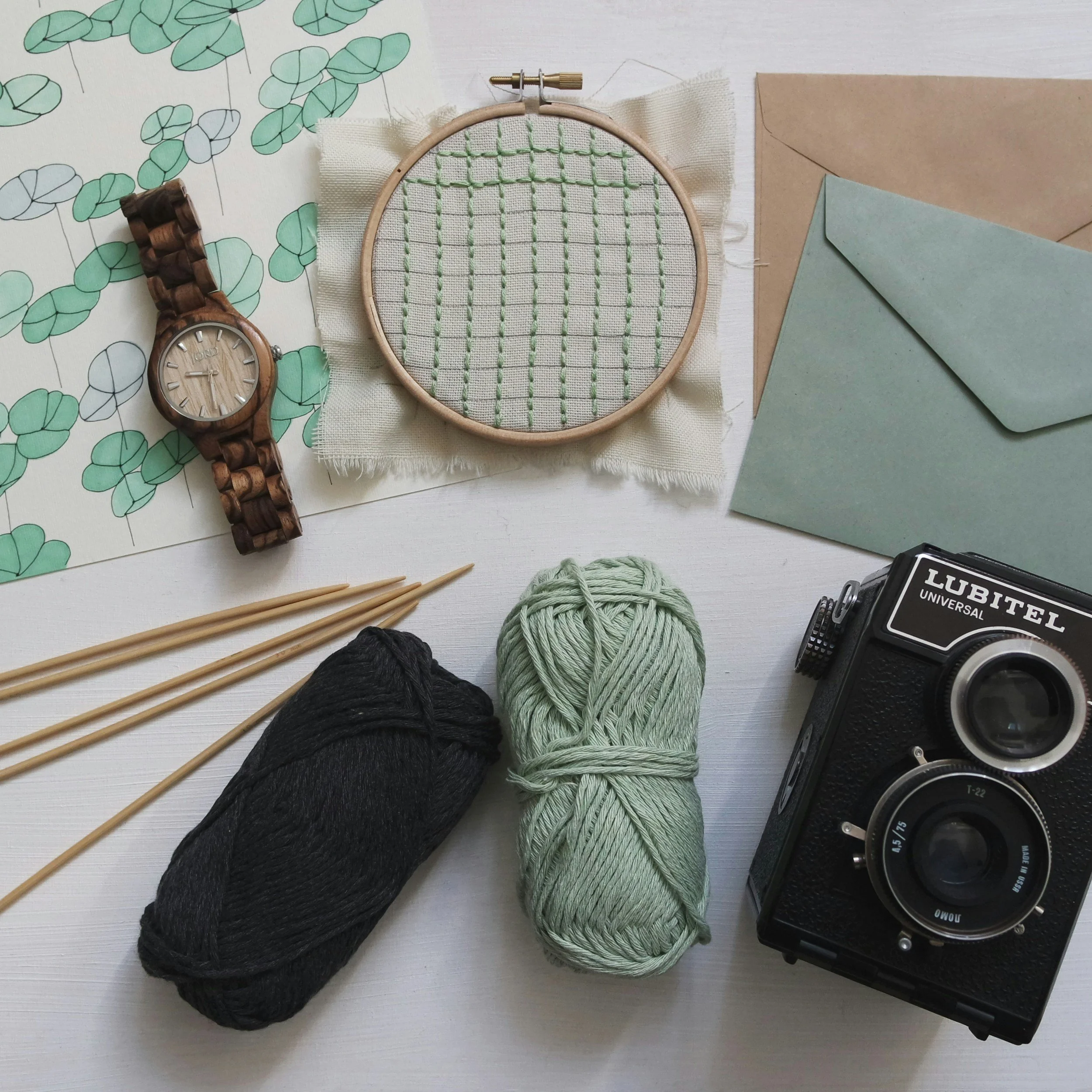
It’s HOBBY TIME!
When was the last time you did something just because it sounded fun?
If you're struggling to answer that question, you're not alone. I was there too - somewhere between my first agency job and today. And honestly? I didn't even realize I'd stopped being fun until I accidentally became fun again. I’ve also noticed that “fun” comes in waves and there are life stages where we have more room for fun than others. But “fun” totally changes meaning as we age as well - though it’s my firm opinion that we should all seek to find some joy, every single day and I hope to help you find what that means for you.
The Accidental Discovery
Let me take you back. I left my agency job to bootstrap The Social Question, working from home in my 950 square foot Chicago condo. As a solopreneur, I was working sun up to sundown - sometimes straight through to bed. No commute meant no boundaries. My desk was 15 feet from my bedroom. My "break" was walking to the kitchen. Or taking the elevator to the mailroom.
I have what I call "squirrely energy" - I like having a lot going on. I thought that meant I should pour everything into building my business. More hours = more success, right?
Wrong.
I was burning out. Imposter syndrome kept creeping in. And weirdly, working MORE was making me LESS engaged with my own success. We’ve actually all seen the studies right, working less actually produces better results and why the 4-day workweek has some momentum behind it.
So I started giving myself permission to do things that had nothing to do with revenue. I leaned into condo DIY projects - built a standing desk, a 7-foot bookshelf, did some wallpapering. I got back into furniture painting, something I'd loved in college and grad school. I started a creative end-of-year mailing campaign in 2022 that lets me flex some creative thinking (2026 will be my 4th box, and I'm already planning its contents).
And I read. A lot. I've always been a reader, but I really gone into overdrive lately. In 2024, I read about 125 books. In 2025, I upped that to over 150. I'm already at 20+ and it’s only February. While I do admit I read mostly fiction - I lean hard into the escapism. A lot of my stories gravitate toward female heroines, which gives me some oomph as a female solopreneur mastering my own story. This year I plan to read more physical books that are filling up that 7-foot bookcase and my TBR pile has spilled over to more piles.
Here's what I noticed: I had more energy. More ideas. Better solutions for clients. I was showing up MORE engaged, not less.
The hobbies weren't making me worse at work. They were making me better. Could I activate that same energy kick with other hobbies?
The Researcher's Brain Kicks In
As a market researcher, I couldn't ignore this pattern. So I started digging in. I spent summer 2024 reading articles and research on adult play. Then in Fall 2024, I surveyed my undergraduate marketing students about their relationship with hobbies.
The responses floored me.
The guilt. The belief that play must be "earned." The sense that hobbies are selfish unless they're productive or profitable. The universal feeling that somewhere between childhood and adulthood, we stopped giving ourselves permission to do things just because they sounded fun.
I realized I wasn't alone. There was a serious silent call for help from my peers. Is this our generational crisis from the “hustle culture” and “gig economy” that’s been on the rise the last few years? Collectively, I think much of society has been trying to break out of our "unprecedented times” new normal and while it feels selfish, I think it’s works in our favor to do this for us, because we want to, not because we have to.
And I realized something else: there's a distinction between brain breaks and permission. House chores? Sure, that's a brain break from work. I can race the washing machine clock to see how many to-do items I can check off in 56 minutes. But creative tasks - reading, building, crafting - those feel "selfish" in a good way. They're not just rest. They're reclaiming something.
I also noticed my own evolution. At first, I only gave myself permission on weekends. Then after work hours. Then - and this felt revolutionary - I started carving out 10-15 minutes during my workday to read a chapter, color a coloring book page, sort some puzzle pieces.
Not because it made me more productive. Because it made me more myself.
The Permission Slip Method
As a solopreneur, I often feel like I'm letting someone down (but who?) by not working 90-hour weeks. The reality? My industry is project-based. I'm bootstrapping, not investor-funded. Do I wish I were further along sometimes? Yes. But my intuition rarely leads me astray, and the Permission Slip Method is part of that.
That's when I developed The Hobby Prescription and the Permission Slip Method. The research was clear: adults who prioritize hobbies without guilt show up more creative, energized, and effective in every part of life - not despite their play time, but because of it.
The problem isn't time. It's not money. It's the belief system that tells us play has an expiration date. Hobbies don't have to be expensive to our time, energy, or wallets. But we do need to see the value in pursuing things that make us happy - not productive, just happy.
So here's what I'm doing in 2026: I'm giving myself permission to try a new hobby every month. Not to master it. Not to monetize it. Not to prove anything. Just to play.
And I'm documenting the research - the academic stuff, the proprietary student surveys, the industry omnibus studies - alongside my own experience. Because if you're anything like me, you need both the permission AND the proof.
What's Coming
Over this series, I'm going to show you the data that proves what I discovered accidentally: giving yourself permission to play isn't selfish - it's essential. We'll unpack the 3 myths you've been sold about adult hobbies, explore why guilt (not logistics) is the real barrier, and walk through the Permission Slip Method so you can write your own.
But first, let me tell you about January, when I gave myself permission to unbox all the puzzles I’d been hoarding from my travels.